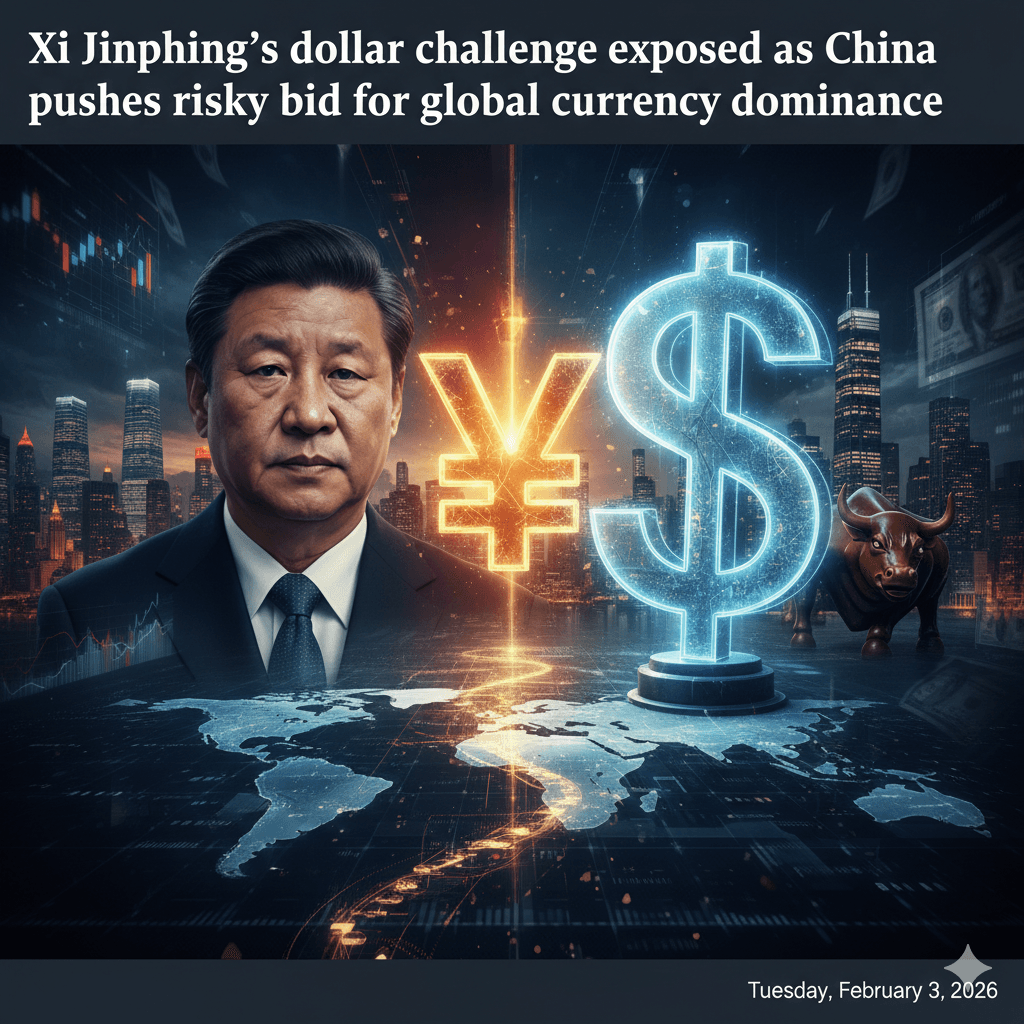
Xi Jinping’s Dollar Challenge Exposed as China Pushes Risky Bid for Global Currency Dominance
02/02/2026
Author: Shaharia
China ramps up its effort to challenge the US dollar, with Xi Jinping leading a high-stakes strategy to make the yuan a dominant global currency. Analysts warn of risks and economic consequences.
In a bold and ambitious move, Xi Jinping has escalated China’s bid to challenge the US dollar as the world’s dominant reserve currency. The strategy, part of Beijing’s long-term plan to elevate the Chinese yuan on the global stage, has caught the attention of economists and financial markets worldwide.
China’s efforts include expanding the use of the yuan in international trade, increasing foreign reserves in yuan, and encouraging major economies to adopt it as a currency for global transactions. While the initiative aims to reduce reliance on the dollar, experts caution that this push carries significant risks, including market volatility and political backlash from Western nations.
Analysts suggest that while the yuan has gained some traction in Asia and emerging markets, establishing it as a credible alternative to the dollar will require years of structural reforms, financial liberalization, and geopolitical maneuvering. The plan underscores China’s growing influence in global finance but also exposes vulnerabilities in its economic system that could be tested in turbulent market conditions.
Investors are closely monitoring Beijing’s next moves, as the balance of power in global currency markets could shift dramatically if the yuan continues to gain international acceptance. The world watches as Xi Jinping’s dollar challenge unfolds, with potential implications for trade, investment, and global economic stability.
Key Points:
China is pushing the yuan to compete with the US dollar globally.
Xi Jinping leads a high-stakes currency strategy.
Analysts warn of economic risks and market volatility.
The move could reshape global trade and finance if successful.